Delhi High Court Land Acquisition Jurisprudence: Section 24(2) Lapsing & Constitutional Applicability
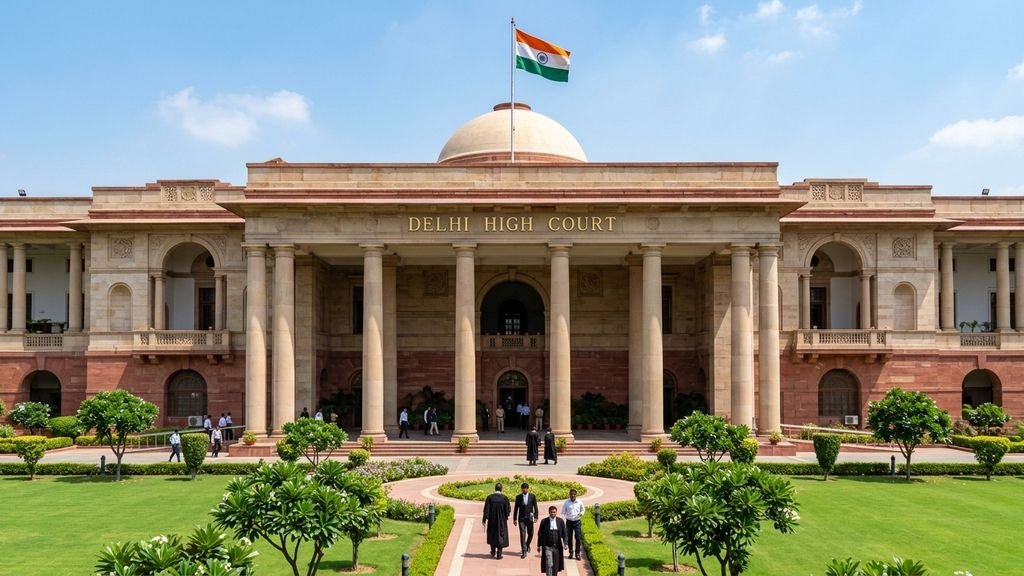
1. Introduction & High Court Constitutional Framework
The jurisprudence developed by the Hon'ble Delhi High Court under the Right to Fair Compensation and Transparent Land Acquisition, Rehabilitation and Resettlement Act (RFCTLARR Act), 2013 provides vital guidance for constitutional writ courts across India, including the Punjab & Haryana High Court at Chandigarh. As a premier forum adjudicating state land acquisitions, the High Court has consistently reinforced that Article 300A of the Constitution of India guarantees property as a vital constitutional right that cannot be usurped through administrative inertia or arbitrary executive action.
When seeking legal recourse against arbitrary land acquisition notifications or contesting inadequate compensation awards, engaging the services of an experienced advocate such as the Best High Court Lawyer for Land Acquisition in Chandigarh ensures that constitutional remedies under Article 226 are deployed effectively. In full conformity with Bar Council of India (BCI) Rules, this article provides an analytical commentary on the landmark legal principles articulated by the High Court.
2. Core Law Interpreted by the Hon'ble Delhi High Court
A. Section 24(2) Statutory Lapsing & Disjunctive Interpretation
Under Section 24(2) of the 2013 Act, where a land acquisition award under the colonial 1894 Act was made 5 years or more prior to the commencement of the 2013 Act (i.e. prior to 1 January 2014), the proceedings are deemed to have lapsed if:
- Physical possession of the land has not been taken by the acquiring authority; OR
- Compensation awarded by the Collector has not been paid or deposited into the bank accounts of the landowners.
The Delhi High Court established that the statutory conditions under Section 24(2) are mandatory. Mere entry in revenue panchnama without taking actual physical possession does not satisfy the requirement of law.
B. Locus Standi of Affected Landowners under Article 226
In the landmark judgment Govt of NCT of Delhi v. Manav Dharam Trust, the Division Bench of the High Court held that the right to claim lapsing under Section 24(2) is not restricted solely to original title holders recorded at the time of preliminary notification. Any successor-in-interest, legal heir, purchaser, or person having a legitimate interest in the land has full locus standi to maintain a writ petition under Article 226 seeking a declaration of statutory lapsing.
3. Applicability to High Court Practice in Chandigarh
The principles enunciated by the Hon'ble Delhi High Court carry persuasive authority before the High Court of Punjab & Haryana at Chandigarh. For landowners in Punjab, Haryana, and UT Chandigarh:
- Challenging Dispossession: Landowners can file Article 226 writ petitions where acquiring agencies fail to establish actual physical possession.
- Challenging Non-Payment: Deposit of compensation in government treasury without court deposit does not discharge statutory duty.
- Seeking Fresh Compensation: Once an acquisition lapses, any subsequent acquisition must comply with 2013 Act rates (4x rural, 2x urban + 100% solatium).
4. Frequently Asked Questions (FAQs)
Q1: What is the primary ratio of the Delhi High Court in Manav Dharam Trust?
A: The Delhi High Court held that subsequent purchasers and affected interested parties have full standing under Article 226 to seek a declaration of statutory lapsing of land acquisition under Section 24(2) of the 2013 Act.
Q2: What happens if compensation was deposited in government treasury?
A: The High Court held that mere treasury deposit without court deposit or payment to landowners does not constitute valid payment under Section 24(2).
Q3: How can a lawyer for land acquisition cases assist in High Court writ petitions?
A: An experienced advocate evaluates revenue records, possession panchnamas, and treasury award receipts to draft Article 226 writ petitions for declaration of lapsing or Section 64 enhancement references.
Disclaimer: This legal commentary is published by Prime Lawyers for academic and educational reference in compliance with Rule 36 of the Bar Council of India Rules. It does not constitute a legal solicitation or formal client advice.
Published: July 2026 | Author: Adv. Shakti Kumar Jain, LL.B. Goldmedalist (Lead Counsel & Senior High Court Advocate) | Category: Land Acquisition Law