1. Statutory Framework of Section 8A Resumption
Section 8A of the Capital of Punjab (Development and Regulation) Act, 1952 grants extraordinary powers to the Estate Officer to resume any site or building allotted or transferred under the Act, and to forfeit a percentage of the total money paid, in cases where the transferee breaches any condition of allotment, fails to pay installment arrears, or commits unauthorized building misuse.
2. Landmark Supreme Court Rule: Resumption is Weapon of Last Resort
The Supreme Court of India in the landmark ruling of Teri Oat Estates (P) Ltd. v. UT Chandigarh & Ors. (2004 2 SCC 130) laid down the fundamental constitutional doctrine that resumption of property under Section 8A is the **ultimate weapon of last resort**. The High Court and Supreme Court have held that administrative authorities cannot cancel property allotments for minor technical building deviations or temporary installment delays where the allottee is willing to rectify the breach or pay interest.
"Resumption is an extreme penalty. The doctrine of proportionality requires that the administration must exhaust lesser statutory remedies (such as levying misuse penalties or granting time to compound building violations) before taking away a citizen's shelter or commercial property."
3. Step-by-Step Defense Procedure Before the Estate Officer
When served with a show-cause notice under Section 8A, property owners must follow a rigorous procedural defense strategy:
- File Detailed Written Objections: Submit a comprehensive reply challenging the SDO (Buildings) technical inspection report line by line.
- Apply for Compounding of Structural Deviations: Under the 2007 Estate Rules, non-sanctioned alterations that do not compromise structural stability are compoundable at prescribed rates (e.g. ₹5/sq.ft).
- Obtain Building Plan Delinking Benefits: Rely on UT Administration Order dated 09.09.2017 to demand that revised building plan approvals not be withheld due to unrelated tenant misuse.
- Demonstrate Bona Fide Compliance: Show proof of eviction petitions filed against non-compliant tenants causing commercial misuse.
4. Statutory Appeals: Chief Administrator & Advisor to Administrator
If the Estate Officer passes an adverse resumption order under Section 8A, statutory remedies must be filed strictly within limitation periods:
- First Appeal (Section 10(1)): Appeal before the Chief Administrator, UT Chandigarh within 30 days of the resumption order.
- Revision Petition (Section 10(2)): Revision before the Advisor to the Administrator, UT Chandigarh within 30 days of the appellate order.
5. High Court Article 226 Writs Against Resumption Orders
Where administrative authorities reject compounding applications or pass arbitrary eviction orders, the Punjab & Haryana High Court entertains Civil Writ Petitions (CWP) under Article 226 of the Constitution of India, granting stay orders against dispossession and directing regularisation of allotments.
Facing Estate Office Resumption or Eviction Notice?
Our senior High Court practice represents property owners in Section 8A hearings, Chief Administrator appeals, and High Court stay petitions.
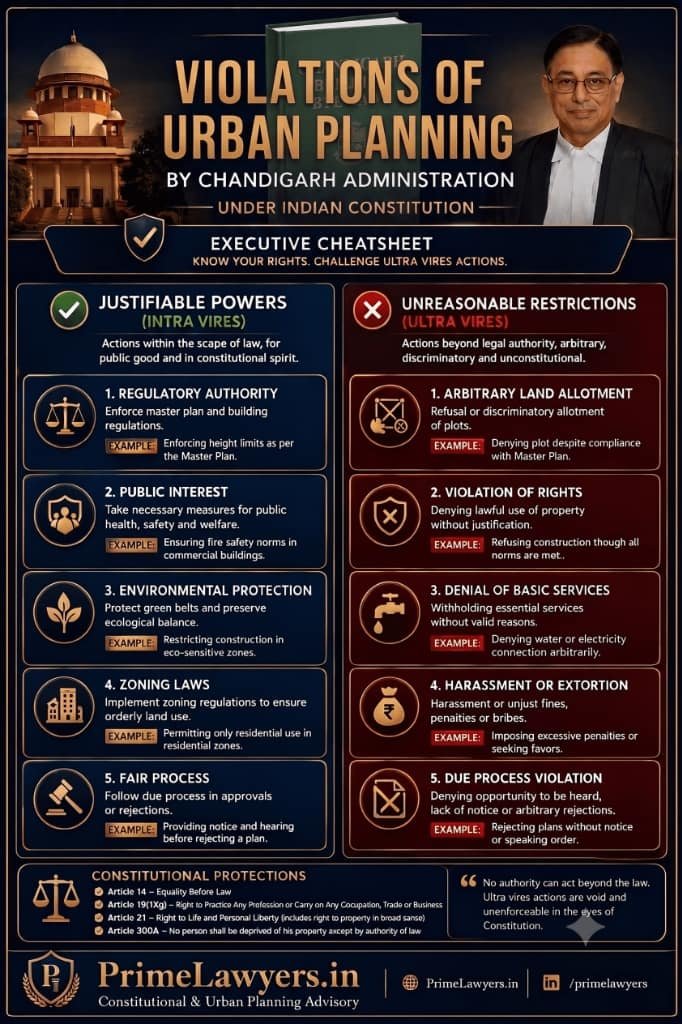
📞 Contact Us Page »Violations of Urban Planning by Chandigarh Administration Under Indian Constitution
Explore our visual legal mindmap analyzing Justifiable Powers (Intra Vires) vs. Unreasonable Restrictions (Ultra Vires) under Articles 14, 19(1)(g), 21, and 300A.